Rei Code Zero is the project of Italian composer and keyboardist Lorenzo Visintin. Its beginnings can be traced back to 2017, when he completed a four-year period in a band performing music from the “Final Fantasy” series. That experience clearly influenced his later artistic direction. In Nobuo Uematsu’s compositions, melody is combined with symphonic scale, rock energy, and the ability to tell stories without words. Similar qualities can be found on “Chronicles”. The name Rei Code Zero was also chosen deliberately. It is intended to sound both like the title of a Japanese video game and a concept connected with computer programming. The world of video games is therefore not merely an addition to the project, but its most important foundation.
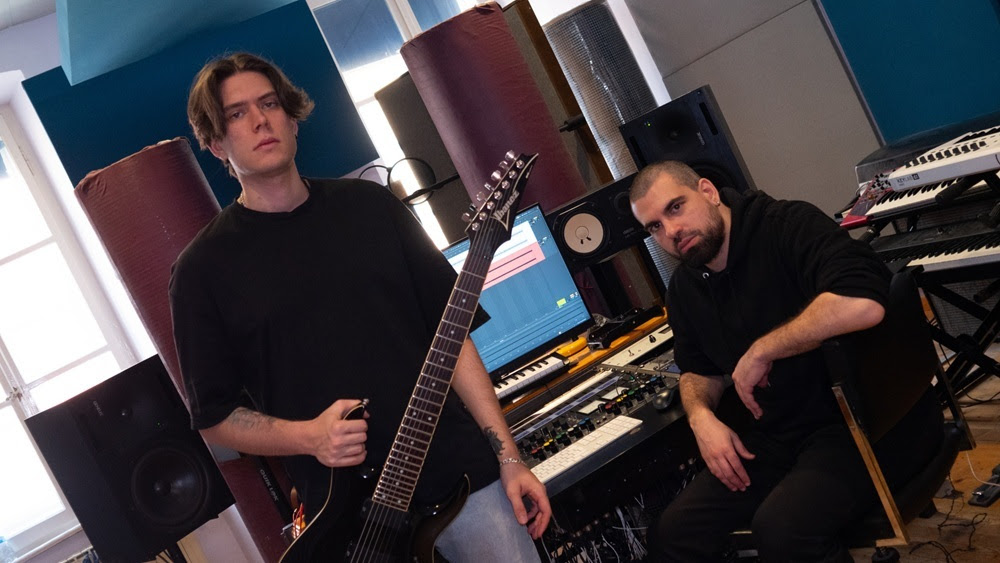
The material was written in 2023. Visintin invited guitarist Stefano Zamburlini, who performed all the guitar parts, and saxophonist Manuel Trabucco to take part in the recording. Rei Code Zero began as a studio project, but the compositions were created with live performances in mind from the very beginning. Dream Theater, Children of Bodom, and Nobuo Uematsu are among its most important influences. The impact of Alexi Laiho’s band is especially noticeable. Fast guitar parts meet prominent keyboards, sudden tempo changes, and melodic death metal. However, Rei Code Zero does not simply copy Children of Bodom. The project draws on a similar kind of energy and combines it with the atmosphere of soundtracks from Japanese role-playing games.
Reklama · podgląd
Miejsce na reklamę
Google AdSense — podgląd układu
“Opening” serves as a cinematic introduction and immediately shows that the saxophone will be more than an occasional arrangement detail. “About Those Who Fight” sounds like the album’s first proper battle theme. Its title brings to mind “Those Who Fight” from “Final Fantasy VII”, although Rei Code Zero does not directly quote Nobuo Uematsu’s composition. “Unleash Your Power” increases the pace, and this is where the influence of Children of Bodom becomes particularly clear. The guitar launches a fast attack, while the keyboards answer with short and distinctive motifs. “Dimensional Gates” broadens the musical space, while “Holographic Sky” stands out because of its almost choral keyboard parts. The jazz-influenced “Under The Neon Lights” most strongly evokes the atmosphere of a city at night. “Hanabi Party”, meanwhile, is a musical explosion of colour in which the guitar, keyboards, and saxophone engage in an impressive dialogue.
However, this stylistic consistency occasionally leads to repetition. In the middle section of the album, the grand themes, fast guitar parts, and bright keyboard sounds begin to rely on similar patterns. “It’s Not Over Yet!” and “Fire In The Eyes” fit the overall journey well, but they do not have a character as distinctive as “About Those Who Fight”, “Under The Neon Lights”, or “Hanabi Party”. The material would also benefit from more restrained passages and stronger dynamic contrasts. The production is clean and precise, but it sometimes smooths out the guitar sound too much. A slightly rougher tone could have emphasised the strength of the riffs more effectively. These are not, however, weaknesses that significantly reduce the quality of the album as a whole.

Komentarze 0
Brak komentarzy.
Dodaj komentarz